
About
Work
Graphic
Music
Photo
Watermark
I drove the execution of an immersive museum experience using augmented reality and HoloLens technology. Our goal was to deepen the connection between viewers and historical works—using technology not as a spectacle, but as an elegant, nearly invisible layer that enhanced discovery, storytelling, and emotion within the physical space.

1.0
Overview
We were tasked with creating a memorable, tech-driven experience in a refined gallery setting—without disrupting the calm, reverent atmosphere of the space. The objects needed to remain the focal point. The technology had to quietly enrich the experience without ever stealing the spotlight. We needed to appeal to a broad range of audiences—from art experts to casual visitors—and deliver information in a way that felt natural, intuitive, and individualized.

2.0

2.1
Process & approach
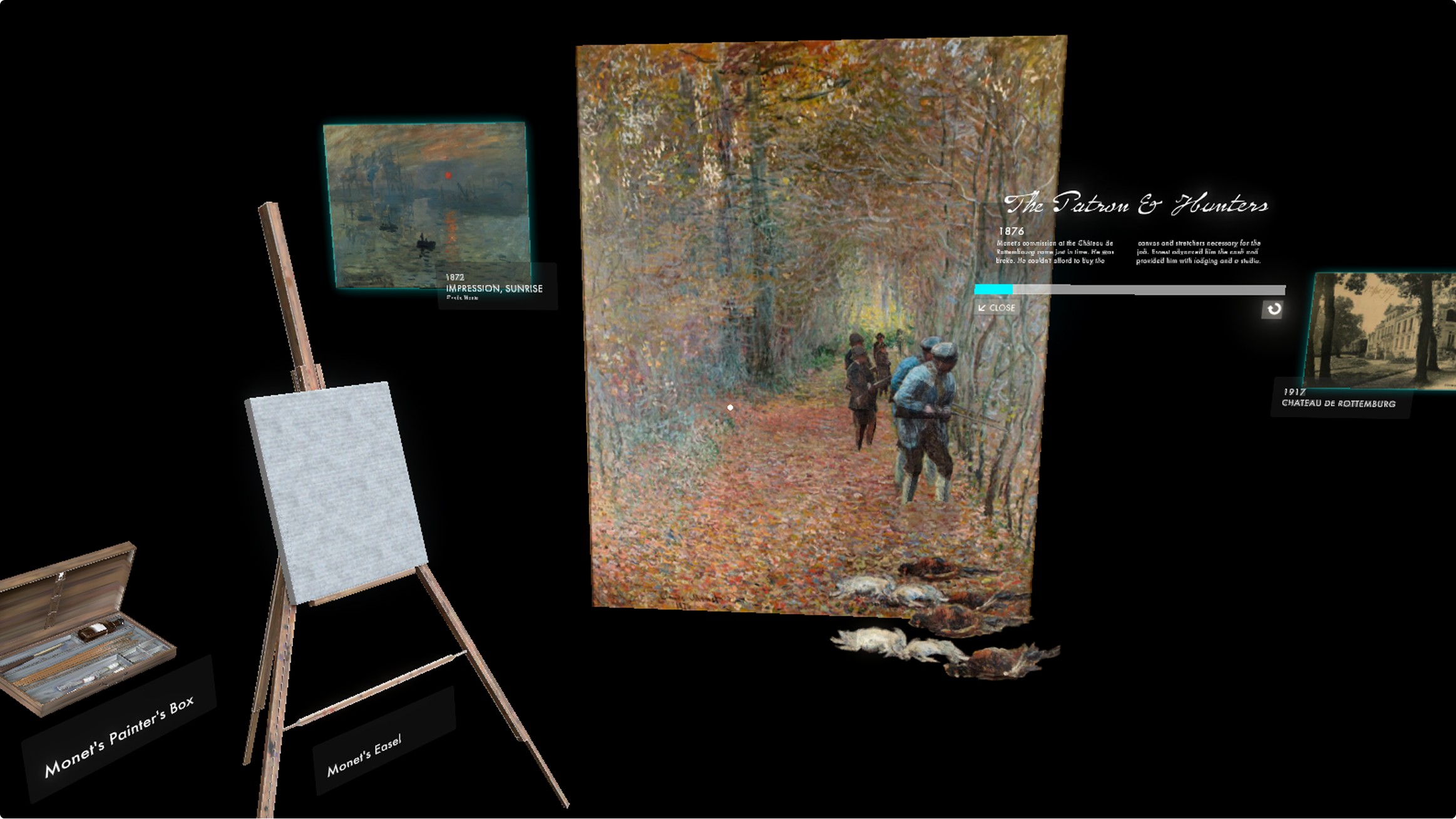
We designed the AR experience to be responsive, non-linear, and deeply personal. As visitors moved through the gallery wearing the HoloLens headset, each artwork or artifact was automatically recognized via image detection. This triggered a unique, layered experience—combining spatial animations, 3D content, and narration through bone-conduction headphones that preserved the gallery’s quiet atmosphere. The UI was ambient and minimal—designed to disappear the moment the user engaged with the space.
3.0
Results
The result was a seamless fusion of art and technology—an experience that felt more like magic than machinery. Visitors could explore, listen, and learn at their own pace, unlocking deeper context around the collection without ever being pulled out of the moment.
This project pushed the boundaries of how we tell stories in physical spaces—and proved that when technology gets out of the way, immersion and meaning can flourish.

4.0

4.1